Artist: Charles-Antoine Coypel (1694–1752)
Origin: France
Date: 1737
Material: Canvas
Technique: Oil
Dimensions: 147 × 195 cm
Collection: The State Hermitage Museum
Inventory Number: ГЭ-5637
Historical Hermitage ID: 37911
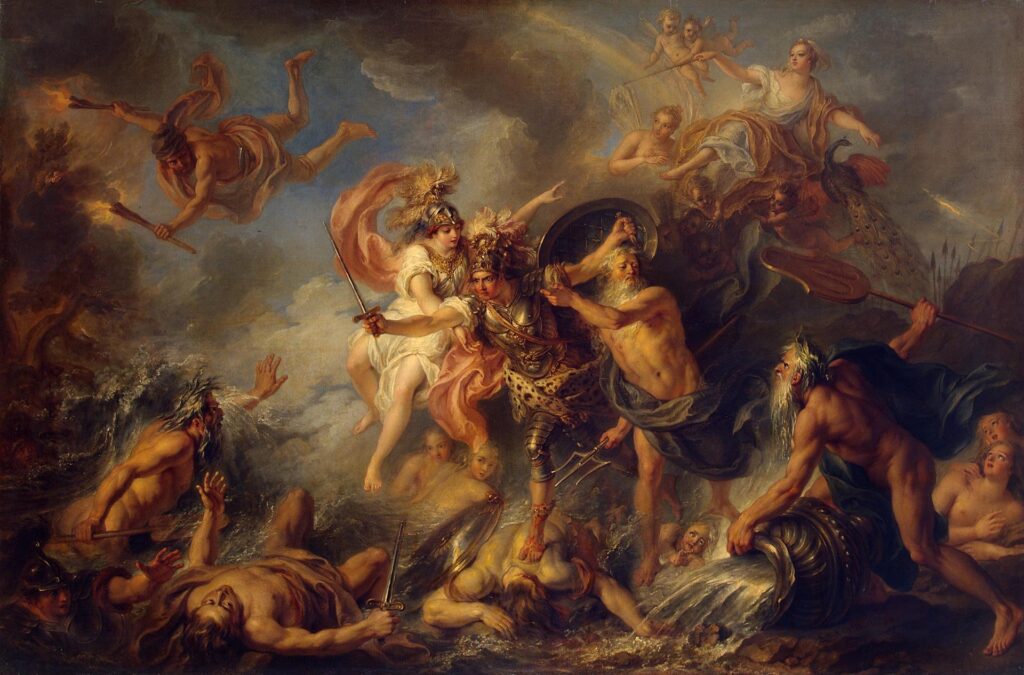
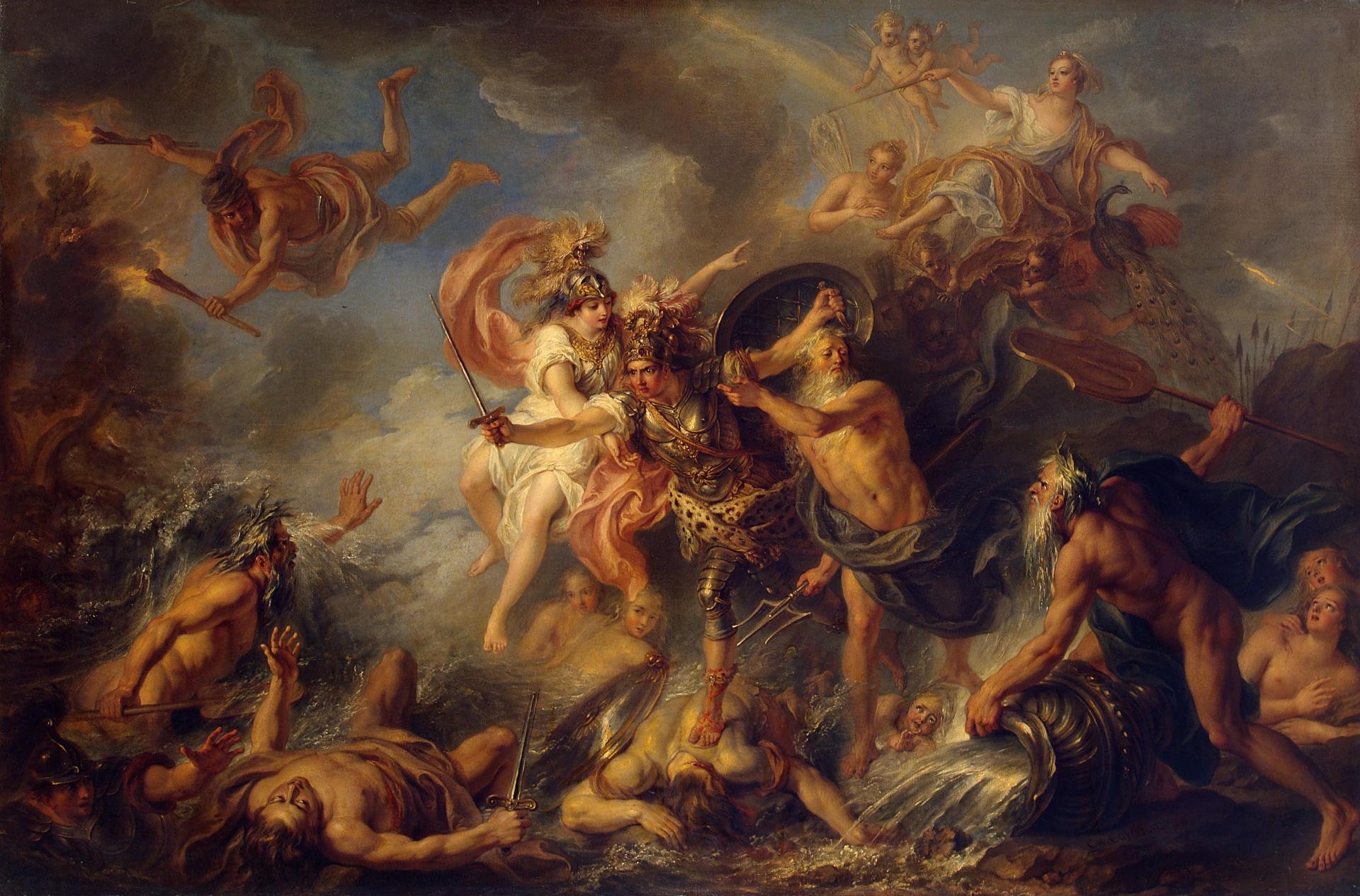
Fury of Achilles, painted in 1737 by the French artist Charles-Antoine Coypel, is a monumental interpretation of one of the most dramatic episodes in Homer’s Iliad.
Executed in oil on canvas and measuring 147 × 195 cm, the painting is preserved in the State Hermitage Museum in Saint Petersburg, where it is recorded under inventory number ГЭ-5637. Викисклад
The work combines classical mythology with the theatrical energy of eighteenth-century French history painting, transforming an episode from ancient literature into a scene filled with movement, conflict and supernatural intervention.
Achilles and the Trojan War
Achilles is the central warrior of Homer’s Iliad and one of the most celebrated heroes of Greek mythology.
The son of the mortal king Peleus and the sea goddess Thetis, Achilles fights for the Greeks during the Trojan War. His extraordinary strength and skill make him their greatest warrior, but his anger — his famous wrath — drives much of the narrative of the Iliad.
Coypel does not simply present Achilles as an isolated heroic figure. Instead, the artist depicts a specific episode in which the mortal conflict of the Trojan War becomes inseparable from the actions of the gods.
Achilles advances against the Trojans while divine powers intervene around him.
The Fury of Achilles
Coypel was deeply familiar with ancient literature, and the painting closely follows an episode from Homer’s Iliad.
Poseidon and Athena, assuming human form, appear in support of Achilles as the hero rushes toward the Trojans.
In the foreground are the river gods Scamander — also known as Xanthos — and Simoeis. Both are hostile to Achilles and form part of the supernatural opposition confronting him.
Above the scene appears Hephaestus, god of fire, carrying torches as he comes to Achilles’ assistance at the command of Hera. Веб-галерея искусств
The result is not simply a battlefield scene.
Coypel creates a world in which heroes, gods and personifications of nature occupy the same space. Human warfare becomes part of a much larger cosmic conflict.
The River Scamander
The presence of Scamander is particularly important to understanding the painting.
In the Iliad, Achilles pursues and kills Trojan warriors near the river. The slaughter becomes so extensive that the river itself rises against him.
Scamander, personified as a river god, attempts to overwhelm Achilles with his waters.
The confrontation transforms the landscape into an active participant in the story. Achilles is no longer fighting only human enemies: even the forces of nature appear to turn against him.
The gods intervene once again, and Hephaestus uses fire against the river, ultimately forcing Scamander to retreat.
Coypel’s painting captures this extraordinary fusion of human violence, mythology and the natural world.
Charles-Antoine Coypel
Charles-Antoine Coypel (1694–1752) was born in Paris into one of the most distinguished artistic families of eighteenth-century France.
He became known as a painter, designer and writer, working within the highly sophisticated artistic environment of the French court.
Coypel specialised in subjects drawn from history, literature, mythology and theatre. His interest in narrative is particularly visible in works such as Fury of Achilles, where the composition functions almost like a theatrical performance.
Figures enter the scene dramatically, gestures communicate the unfolding action, and the viewer is placed directly before the climax of the story.
Coypel eventually occupied important positions within the French artistic establishment and became one of the notable history painters of his generation.
Painting as Theatre
One of the defining qualities of Fury of Achilles is its theatricality.
Coypel was deeply interested in drama and literature, and this experience shaped the way he constructed narrative scenes.
The painting does not present mythology as a distant or static world.
Bodies twist and move across the canvas. Gestures direct the viewer from one figure to another. Gods descend into the conflict while the river gods occupy the foreground and Achilles drives the action forward.
Light, colour and movement transform the ancient literary episode into an immediate visual spectacle.
This dramatic approach was particularly well suited to eighteenth-century French painting, in which classical subjects remained important while artists increasingly explored movement, emotion and theatrical presentation.
Homer in Eighteenth-Century Art
Ancient Greek and Roman literature remained a fundamental source for European artists throughout the eighteenth century.
The Iliad offered painters an extraordinary range of subjects: warfare, heroism, grief, anger, friendship, death and divine intervention.
Achilles was especially compelling because he embodied contradictions.
He is almost superhuman in battle yet governed by powerful emotions. His courage exists alongside rage, grief and a desire for revenge.
For an artist interested in dramatic narrative, Achilles therefore provided an ideal protagonist.
Coypel’s painting concentrates these qualities into a single moment — a hero moving forward with almost unstoppable force while gods and nature themselves become involved in his struggle.
The Rudanovsky Collection
Fury of Achilles was included in the historical catalogue of works associated with the A. K. Rudanovsky Collection.
The painting is particularly important within the wider Rudanovsky collection because it represents eighteenth-century French history painting alongside works from the Italian Renaissance, Flemish painting, German art and other European traditions.
The surviving Rudanovsky record connected the painting directly with the Hermitage catalogue entry that formerly carried digital record number 37911.
That historical museum identifier can still be connected with the present work, which is recorded under inventory number ГЭ-5637. Викисклад
The painting is preserved today in the State Hermitage Museum in Saint Petersburg.
A Monumental Mythological Painting
At nearly two metres wide, Fury of Achilles was conceived on a scale appropriate to its heroic subject.
Its size allows Coypel to construct an elaborate narrative rather than concentrating upon a single figure.
Achilles, the gods, the river deities and the surrounding action together form a complex visual interpretation of Homer.
The painting therefore occupies several worlds simultaneously: ancient literature, eighteenth-century French painting and the later history of European collecting.
Within the history of the Rudanovsky Collection, it represents one of the strongest examples of French mythological painting associated with the family’s collection.