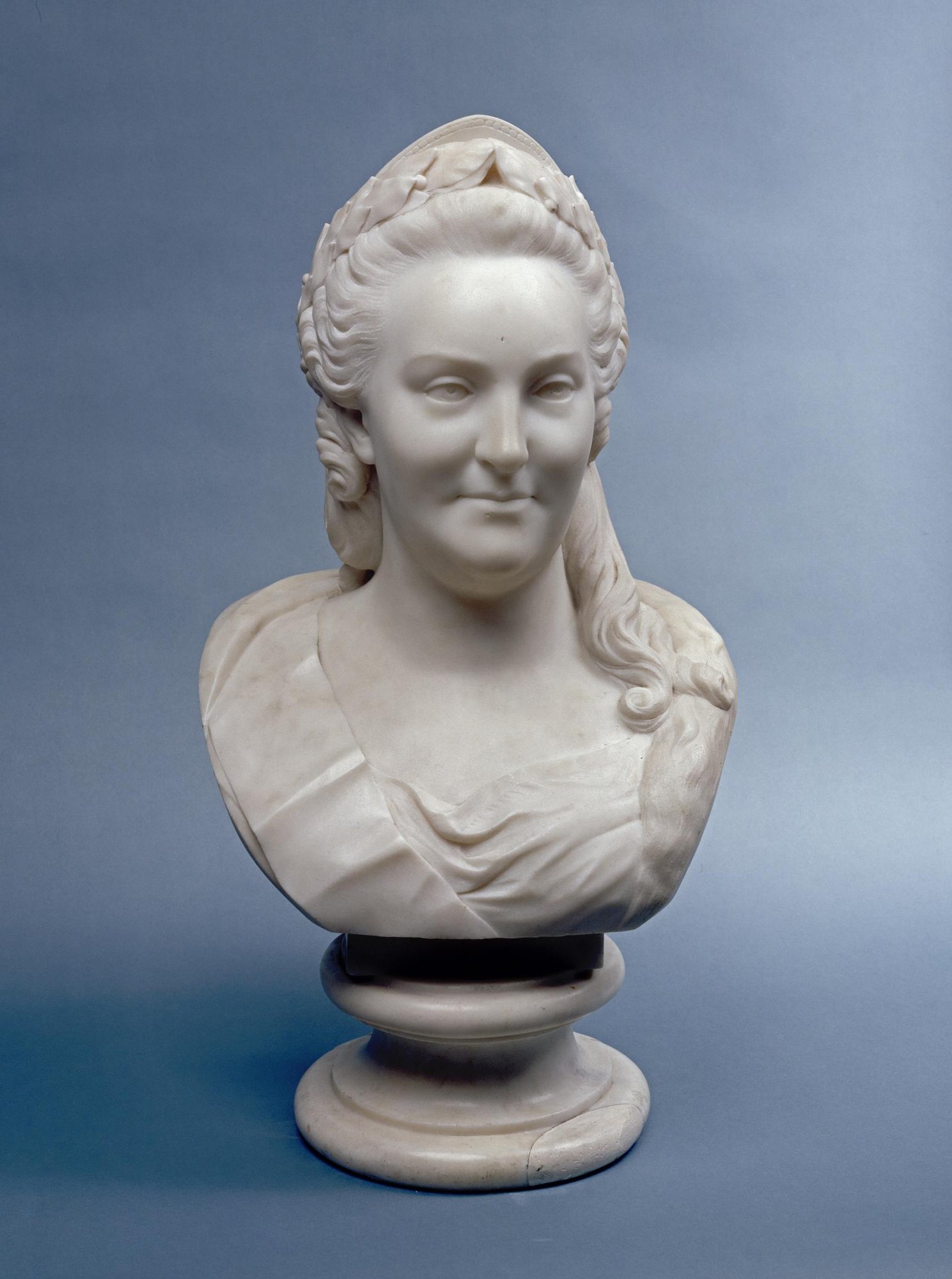
Artist: Joseph Mallord William Turner (1775–1851)
Origin: Great Britain
Date: first half of the 19th century
Material: panel
Technique: oil
Dimensions: 63.3 × 90.7 cm
Current Collection: The State Hermitage Museum
Inventory Number: GE-7011
Hermitage ID: 38964
Rudanovsky Connection: Entered the Hermitage in 1931 from the collection of A. K. Rudanovsky.
An early landscape by J. M. W. Turner, painted on panel in the first half of the nineteenth century.
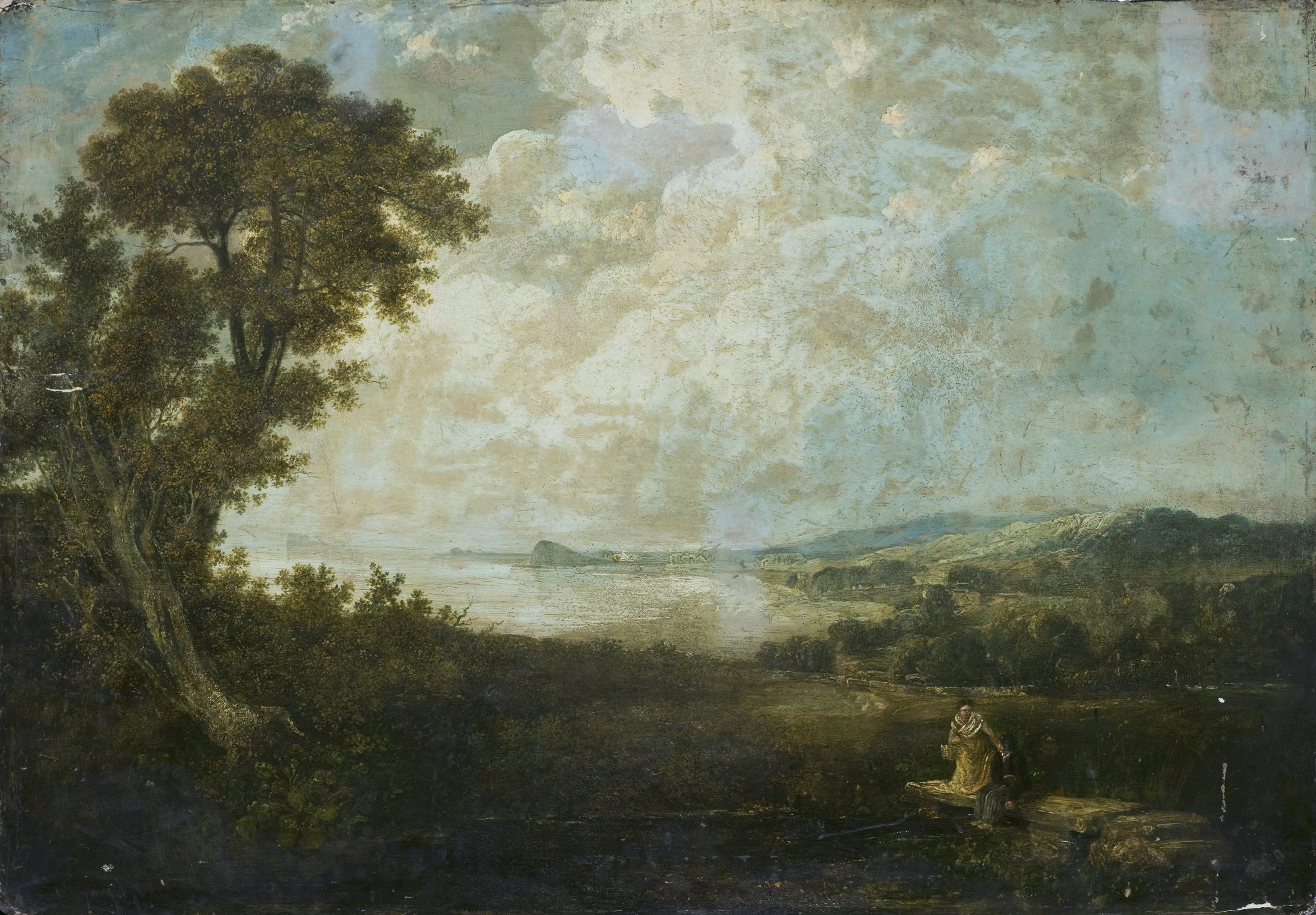
Landscape. The State Hermitage Museum.
The painting entered the Hermitage in 1931, handed over by the Antikvariat All-Union Association, and it was originally in the collection of A. K. Rudanovsky. It is not currently on permanent display.
It is a horizontal landscape — 63 by 91 centimetres — with a great tree at the left, an estuary in the distance and two small figures in the foreground.
The Object
The composition is classical.
A large tree stands at the left, its trunk and branches filling the edge of the panel, and its foliage spreads across the upper left. Beyond it, a wide water opens toward a low horizon, with a headland and a distant hill.
At the lower right, two figures sit on a fallen log, and the ground around them is dark and grassy. The sky, with rolling clouds, occupies more than half the panel.
The Tree
The tree is the painting’s frame.
It is a tall, mature tree, with a thick trunk and a mass of dark green leaves, and it leans slightly toward the centre. Its branches spread across the sky, and its roots grip the bank.
Trees of this kind are a classical device: they frame the view, give the composition a scale and push the eye toward the distance.
The Water
The water is the painting’s light.
It is an estuary or a wide river, painted in pale greys and silvers, and it reflects the sky. Its surface is calm, and a few small boats or marks suggest activity.
The water gives the landscape its depth, and it opens the composition toward the horizon.
The Figures
Two figures sit at the lower right.
They are small, painted in a few strokes, and one appears to be reading or holding a book. They give the landscape its human scale, and they suggest a moment of leisure.
Figures of this kind are a convention of the classical landscape: they are staffage, and they make the scene legible without dominating it.
The Sky
The sky is the painting’s largest area.
It is filled with clouds, painted in creams, greys and pale blues, and it is the source of the light. The clouds roll across the panel, and their forms are soft and luminous.
The sky is characteristic of Turner, who was one of the great painters of atmosphere, and it gives the landscape its weather and its mood.
Turner
Joseph Mallord William Turner (1775–1851) was an English painter.
He was one of the greatest landscape painters of the nineteenth century, and his work ranges from precise topographical views to visionary images of light and storm. He was a master of watercolour and oil, and he was famous for his skies.
This panel belongs to his early manner, when he was still working in the classical tradition of Claude Lorrain.
The Early Manner
The painting belongs to Turner’s early period.
In his early years, Turner painted landscapes in the manner of the Dutch and French masters: carefully composed views, with a tree, a water, a distant hill and staffage. He studied Claude and Poussin, and he imitated their balance and their light.
This panel is a good example of that phase: a classical composition, painted with care and with an eye for atmosphere.
The Condition
The painting is in poor condition.
Its surface is abraded and blanched, especially in the sky, and there are losses and scratches. The paint has been rubbed, and the varnish has deteriorated.
The damage is part of the object’s history: it shows how a painting can survive, and how it can be changed by time, travel and neglect.
The Headland
A headland juts into the water at the centre.
It is a dark, low mass, painted in greens and browns, and it breaks the line of the horizon. On it, a few small buildings or trees are visible.
The headland gives the landscape a focal point, and it prevents the water from becoming an empty space.
The Panel
The painting is on panel.
Panel was a common support for small landscapes in the period: it is smooth, rigid and takes detail. The panel here is thin, and its surface is abraded.
The panel gives the painting its texture: the grain of the wood can be seen through the paint in places.
The Claudean Tradition
The painting belongs to the Claudean tradition.
Claude Lorrain was the great master of the classical landscape, and his compositions — a tree, a water, a distant hill, a golden light — became a model for generations of painters. Turner studied him closely.
This landscape follows the formula, and it shows a young painter learning from the old master.
The Collector
The painting came to the Hermitage with the Rudanovsky collection.
Rudanovsky collected European art of many kinds, and his collection included English painting as well as Dutch, Flemish, French and Italian works.
The painting is therefore a double document: of Turner’s early manner and of a Russian collector’s taste.
The Bank
The bank runs across the foreground.
It is dark and grassy, with bushes and stones, and it separates the viewer from the water. The bank is painted in browns and greens, and it is loosely brushed.
The bank is the painting’s foreground: it gives the eye a place to start, and it pushes the view into the distance.
The Foliage
The foliage is painted in masses.
The leaves of the great tree are not individual: they are clusters of dark green, with a few highlights on the edges. The same treatment is used for the bushes and the distant trees.
Painting foliage in masses is a classical technique: it gives volume and movement without describing every leaf.
The Water’s Edge
The water’s edge is a pale line across the middle of the panel.
It is where the dark land meets the bright water, and it is painted with a few dry strokes. The edge gives the landscape its structure, and it separates the near from the far.
Edges of this kind are a test of a landscape painter’s skill: they must be soft and precise at once, and they must suggest distance.
Provenance
The painting carries the inventory number GE-7011. It entered the Hermitage in 1931, handed over by the Antikvariat All-Union Association, and it was originally in the collection of A. K. Rudanovsky.
In the Hermitage
The painting is preserved in the State Hermitage Museum in Saint Petersburg and is not on permanent display.
It is an early Turner, and it shows the painter learning his art: a tree, a water, a sky and two figures, composed with the discipline of the old masters, and already, in the sky, a hint of what Turner would become, and what he would leave behind in the clouds of his late works, in the rain and steam of his last pictures.