Artist: School of Andrea del Verrocchio
Artist dates: Andrea del Verrocchio (1435–1488)
School: Florentine / Italian Renaissance
Collection: The State Hermitage Museum
Inventory Number: ГЭ-5520 Викисклад
Historical Hermitage ID: 29505
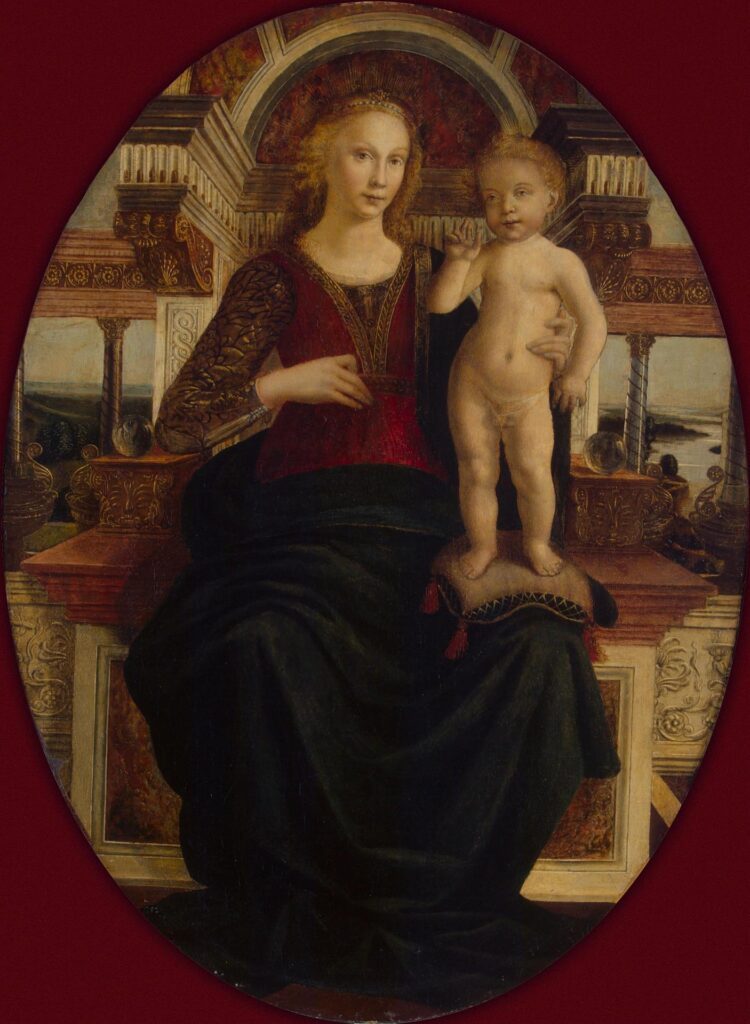
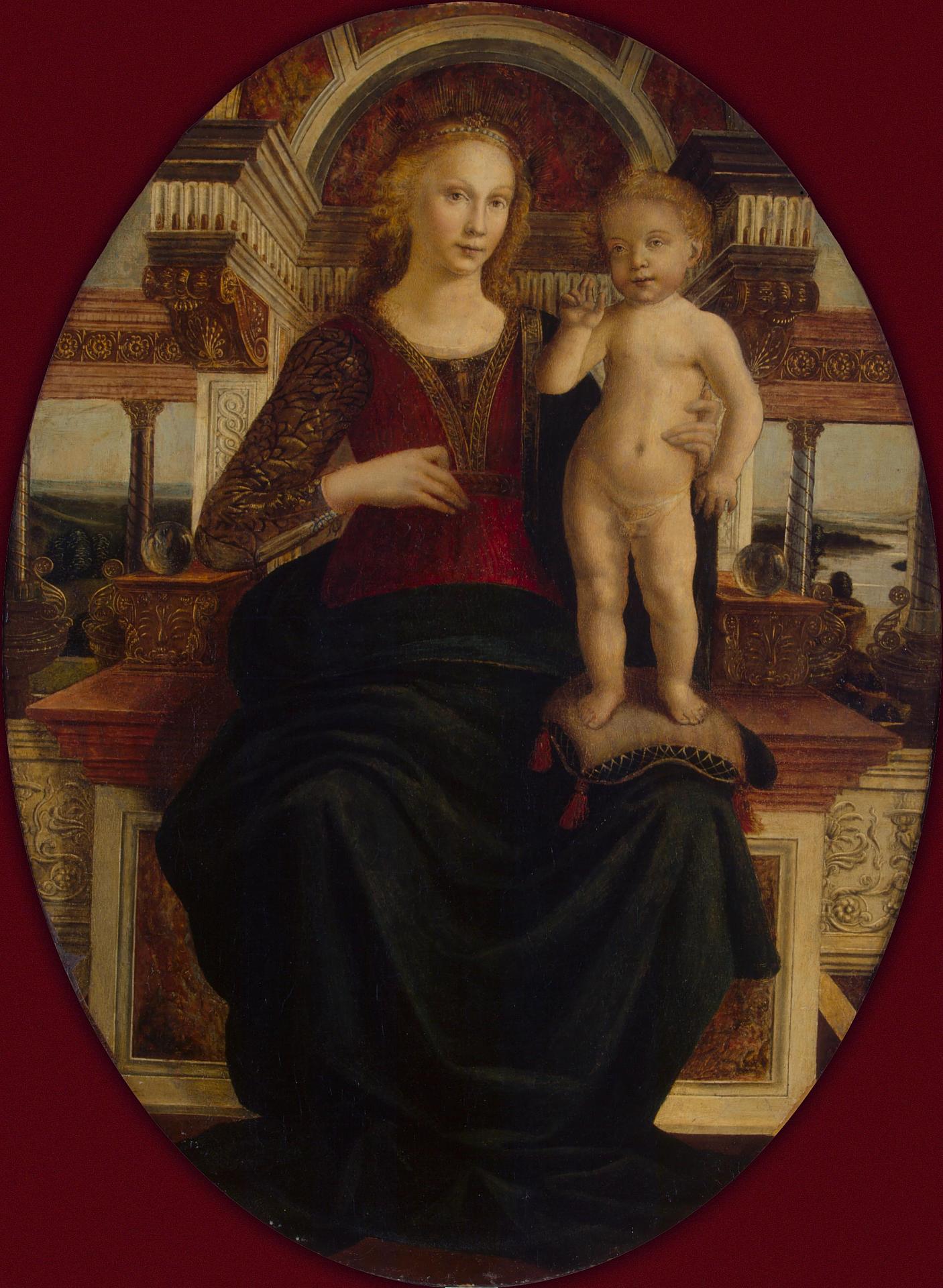
Madonna and Child is a Renaissance painting attributed to the school of Andrea del Verrocchio, one of the most influential artistic workshops in fifteenth-century Florence.
The work is preserved in the State Hermitage Museum in Saint Petersburg, where it is recorded under inventory number ГЭ-5520. Викисклад
Its attribution to the school of Verrocchio is significant. Rather than identifying the painting as an autograph work by Andrea del Verrocchio himself, this designation connects it with the artistic environment surrounding the master — his workshop, pupils and followers.
Andrea del Verrocchio
Andrea del Verrocchio (1435–1488) was one of the central figures of the Florentine Renaissance.
Painter, sculptor and goldsmith, Verrocchio directed a highly influential workshop in Florence during the second half of the fifteenth century. His importance extends beyond his own surviving works: his studio became a training ground for a remarkable generation of Renaissance artists.
The workshop tradition was fundamental to artistic production in Renaissance Florence. Major masters rarely worked entirely alone. Assistants and pupils participated in commissions, learned established compositions and techniques, and produced works based upon designs developed within the studio.
For this reason, paintings described today as belonging to the school or workshop of Verrocchio form an important part of understanding his artistic legacy.
Madonna and Child
The image of the Virgin Mary and the Christ Child was among the most important and enduring subjects of Renaissance art.
Unlike monumental altarpieces created for large churches, representations of the Madonna and Child could also serve a more intimate devotional purpose. They allowed artists to present one of Christianity’s central subjects through the relationship between mother and child.
During the Renaissance, this traditional religious theme increasingly incorporated a new sensitivity toward human emotion and physical presence.
Mary was represented not only as a sacred figure but also as a mother. The Christ Child, while carrying theological significance, could be portrayed with the movement, gestures and vulnerability of an actual infant.
This combination of the divine and the human became one of the defining characteristics of Italian Renaissance representations of the subject.
Florence and the Renaissance Workshop
Fifteenth-century Florence was one of the great centres of European artistic innovation.
Artists were studying anatomy, perspective, classical sculpture, movement and the natural world with renewed intensity. At the same time, traditional Christian subjects continued to dominate many important commissions.
Verrocchio’s workshop stood directly within this environment.
Painting, sculpture and the decorative arts were not treated as completely separate disciplines. The experience of modelling figures in three dimensions could influence the treatment of bodies in painting, while drawing provided a common foundation for virtually every form of artistic production.
Works emerging from Verrocchio’s circle consequently participated in a broader visual language that emphasised carefully constructed figures, physical presence and close observation.
The School of Verrocchio
The designation “School of Andrea del Verrocchio” should not be understood as the name of a formal academy.
In art-historical terminology, it indicates that a work is closely connected stylistically or historically with the artistic environment established by the master but cannot securely be attributed to Verrocchio himself.
This distinction is particularly important in the case of Renaissance workshops.
Ideas, drawings and compositions circulated between masters, assistants and pupils. A successful design might be repeated or adapted, while several artists could participate in the production of a single work.
As scholarship develops, attributions can therefore change. Paintings once assigned directly to a famous master may later be described as workshop, school or circle — while other works may be reassigned to individual artists who previously worked under a broader attribution.
The Hermitage painting belongs to this complex artistic tradition.
Verrocchio’s Legacy
The influence of Verrocchio’s workshop extended far beyond his own generation.
His studio became associated with some of the most important developments of the late Florentine Quattrocento, and artists connected with his circle helped carry its visual ideas into the final decades of the fifteenth century.
The importance of such a workshop lies not only in identifying which parts were painted by which individual hand, but in understanding how artistic knowledge was transmitted.
Drawings, compositions, techniques and ways of representing the human figure moved from master to pupil and from one generation to another.
A painting attributed to the school of Verrocchio is therefore part of a larger story: the extraordinary concentration of artistic experimentation that made Renaissance Florence one of the defining centres of European art.
The Hermitage
Today, Madonna and Child forms part of the collection of the State Hermitage Museum in Saint Petersburg.
The former digital catalogue of the museum identified the work under Hermitage record 29505, while surviving catalogue data associates it with inventory number ГЭ-5520. Викисклад
The original Rudanovsky website included the painting among works connected with the A. K. Rudanovsky Collection. However, the surviving text of that particular post contains only the image and the former Hermitage catalogue link and does not provide a detailed provenance statement.
For that reason, the connection with the Rudanovsky collection is preserved here as part of the historical Rudanovsky record, while more specific claims about acquisition, ownership dates or transfer to the Hermitage should await additional documentation.