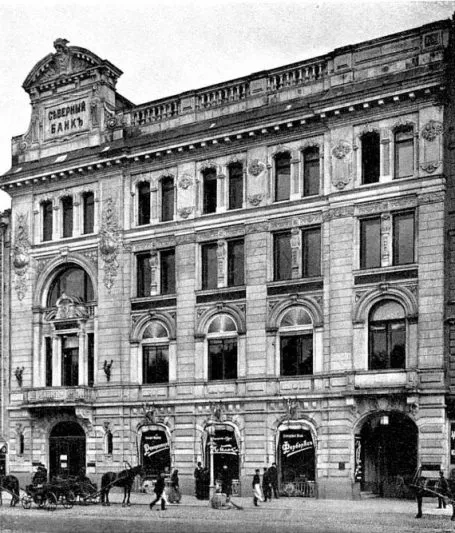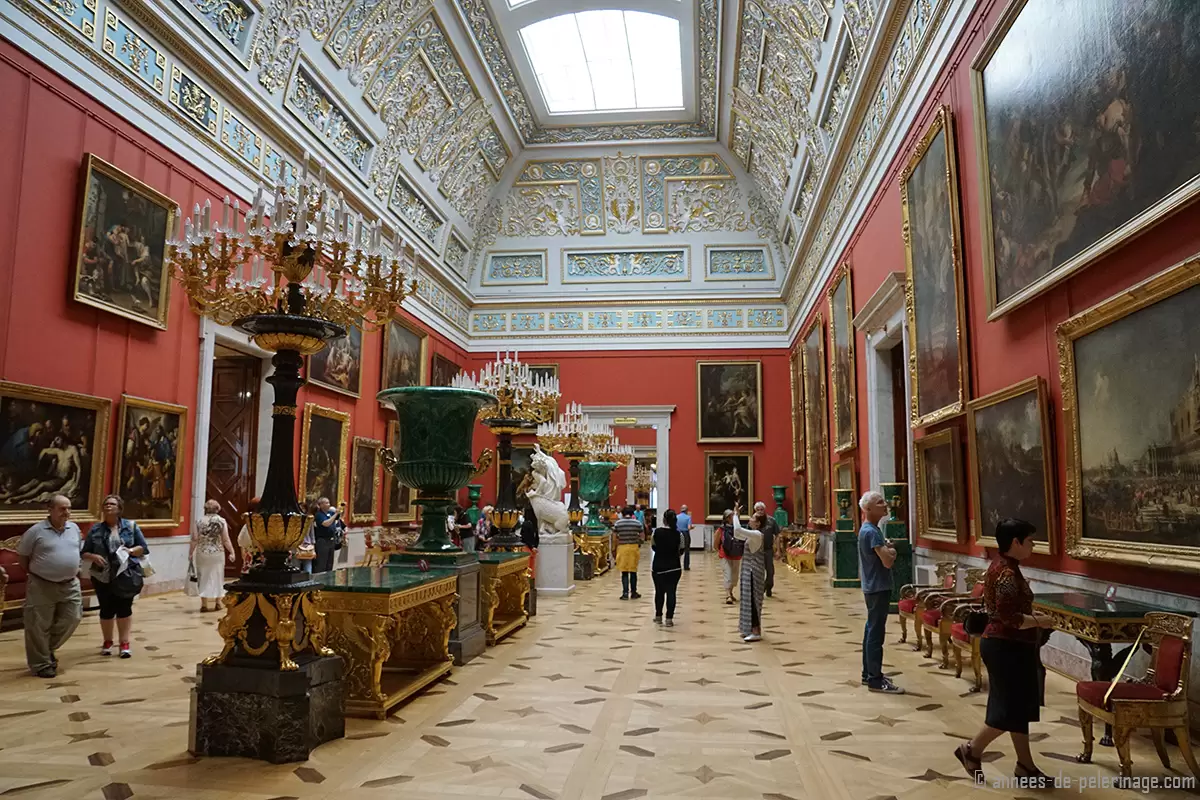
The State Hermitage Museum in St. Petersburg is one of the great museums of the world.
Its collections are housed principally within the historic palace complex on the banks of the Neva River, including the magnificent Winter Palace, once an imperial residence of the Russian monarchs.
Across its vast collections are works representing centuries of European and world culture — paintings, sculpture, archaeological objects, decorative arts, jewellery, porcelain and countless other objects.
Within this enormous history lies a much smaller and more personal story:
the story of works once associated with the collection of A. K. Rudanovsky.
From Private Collection to Museum
Private collectors played an important role in the cultural life of Imperial Russia.
Paintings, sculpture and decorative objects moved through an international network of collectors, dealers, aristocratic families and galleries.
The surviving historical records of the Rudanovsky Collection reveal a collection that included works associated with several major traditions of European art.
Italian Renaissance imagery appears alongside German and Flemish painting.
French eighteenth-century mythology stands beside nineteenth-century portraiture.
Watercolours, sculpture and decorative art further demonstrate the variety of objects connected with the collection.
A number of these works were subsequently recorded in the holdings of the State Hermitage Museum.
European Art in the Rudanovsky Collection
The surviving records connect the Rudanovsky name with works attributed to or associated with artists from different periods and European schools.
Among them is Jean-Baptiste Regnault, the French painter whose mythological works include Andromeda’s Return and Wedding of Perseus and Andromeda.
The collection records also include Charles-Antoine Coypel’s Fury of Achilles, painted in 1737 and inspired by the world of Homer’s Iliad.
German painting is represented by works including Carl Christian Vogel von Vogelstein’s Portrait of a Lady and a Renaissance Crucifixion with Attendant Saints and Donor associated with Hans Wertinger.
The surviving material also connects the collection with Flemish painting, Italian Renaissance art, European watercolours and sculptural and decorative objects.
Taken together, these works reveal the breadth of artistic interests represented in the historical Rudanovsky records.
Andromeda’s Return
One of the works specifically highlighted in the original Rudanovsky account of the Hermitage was Jean-Baptiste Regnault’s Andromeda’s Return.
The painting belongs to the classical story of Perseus and Andromeda, a subject that fascinated European artists for centuries.
Another work by Regnault associated with the collection, Wedding of Perseus and Andromeda, continues the same mythological narrative.
The presence of both paintings in the historical Rudanovsky records creates an interesting relationship between individual objects within the collection.
Rather than existing only as isolated works, they become parts of a broader network of artists, subjects and stories.
Fury of Achilles
Another important French work recorded in connection with the collection is Charles-Antoine Coypel’s Fury of Achilles of 1737.
Inspired by Homer’s Iliad, the monumental composition brings together Achilles, gods and personifications of nature in a dramatic mythological scene.
Its presence alongside Regnault’s paintings demonstrates a particular strength in French mythological and history painting among the surviving works documented by the Rudanovsky project.
Renaissance and Religious Art
The collection was not limited to eighteenth-century French painting.
The surviving records also include religious works connected with the artistic traditions of Renaissance Europe.
Among them is a Madonna and Child associated with the school of Andrea del Verrocchio, linking the collection with the artistic world of fifteenth-century Florence.
Another Madonna and Child in the historical records is attributed to Desiderio da Settignano, one of the important sculptors of the Florentine Renaissance.
German Renaissance art is represented by the Crucifixion with Attendant Saints and Donor associated with Hans Wertinger.
Together, these objects demonstrate how works separated by geography, medium and centuries could eventually meet within the history of a single private collection.
Collecting Across Generations
A collection is more than a group of valuable objects.
Every work carries several histories simultaneously.
There is the history of the artist who created it.
There is the subject represented within it.
There is the history of the people who owned, sold, inherited or collected it.
And finally, there is the history of the museum or institution in which the object may eventually be preserved.
The story of the A. K. Rudanovsky Collection belongs to this broader history of European collecting.
Individual paintings and objects travelled across countries and generations before becoming part of institutional collections.
Their former ownership remains part of their provenance and therefore part of their history.
The State Hermitage Museum
The State Hermitage Museum grew from the imperial collections of the Russian monarchy and today preserves an extraordinary range of art and cultural material.
Its home in the historic centre of St. Petersburg gives the museum a unique character: works of art are preserved within buildings that are themselves inseparable from Russian history.
For the Rudanovsky story, however, the importance of the Hermitage is particularly personal.
Museum records and historical references allow individual objects once connected with the Rudanovsky collection to be traced beyond the world of private collecting.
Paintings that once belonged to private surroundings can today be studied as part of a public museum collection.
Reconstructing the Collection
The original Rudanovsky website began the process of gathering these scattered records together.
Its individual entries preserved artwork titles, artists, photographs and links to the former digital catalogue of the State Hermitage Museum.
Some of those museum links have since changed or disappeared.
The purpose of this collection is therefore not simply to reproduce the old website.
It is to preserve the information that survives, distinguish documented facts from family tradition, and gradually reconstruct the history of the collection object by object.
Where museum records survive, they can provide inventory numbers, dimensions, dates and provenance.
Where information remains incomplete, the gaps are preserved rather than filled with assumptions.
A Collection Remembered Through Its Objects
Private collections can be dispersed.
Buildings change.
Documents disappear.
Names can vanish from catalogues as ownership changes and generations pass.
Objects, however, can preserve fragments of those histories.
A painting in a museum may still carry an old collector’s name in its provenance. A photograph may preserve an address. An inventory number may reconnect an object with a catalogue created decades earlier.
Through these fragments, the history of the A. K. Rudanovsky Collection can gradually be reconstructed.
The works preserved in the State Hermitage Museum therefore represent more than individual paintings and objects.
Together, they provide surviving points of connection between the history of European art, the culture of private collecting in Russia and the history of the Rudanovsky family.